



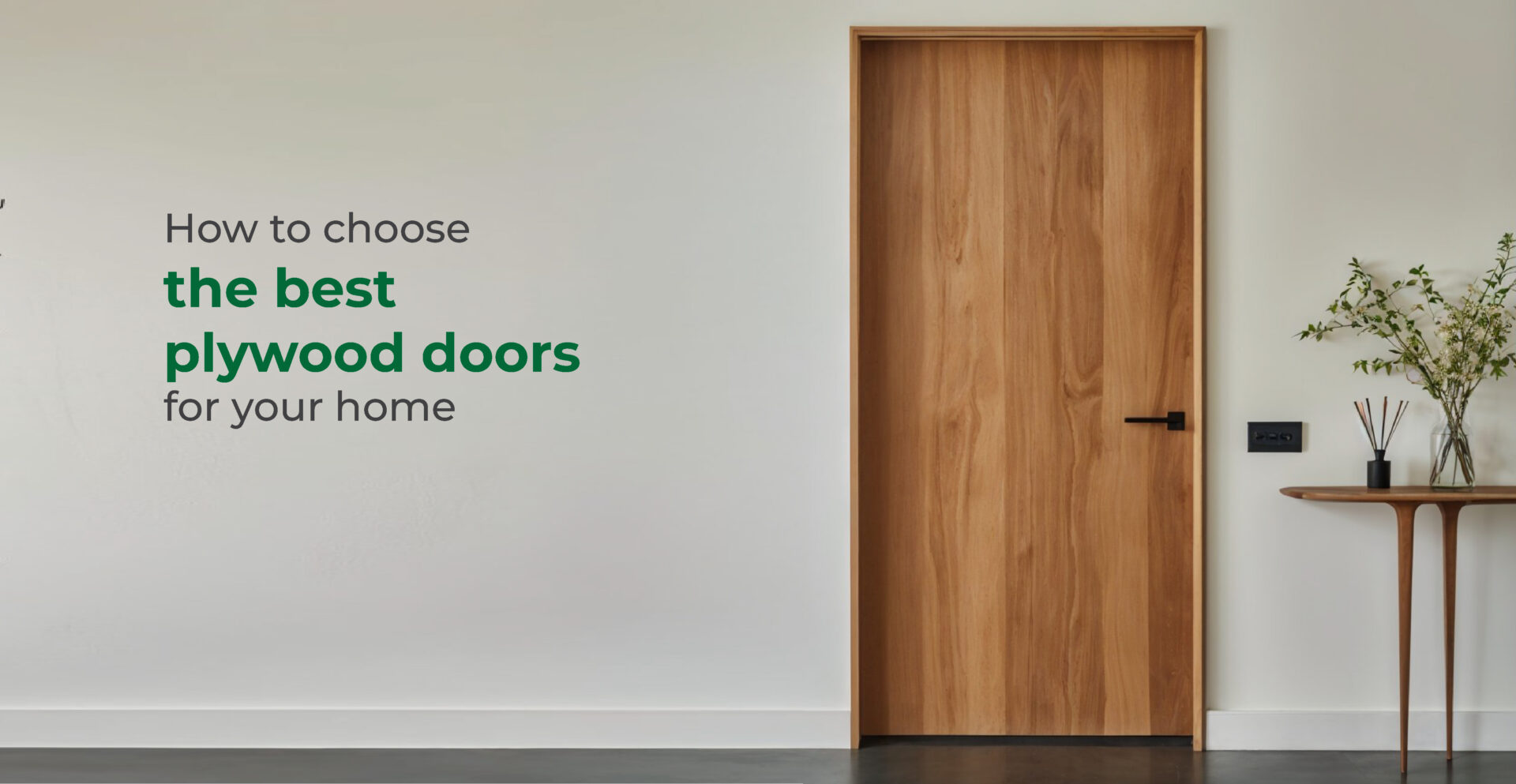
How to choose the best plywood doors for your home
When it comes to choosing materials for building safe, secure, and long-lasting spaces, be it homes, offices, or commercial interiors, fire resistant plywood stands out as a smarter and more reliable option. It not only helps slow down the spread of fire but also offers better structural integrity during emergencies. If you are serious about safety, this type of plywood should be on your radar.
Table of contents
- Which plywood is best for doors?
- Why choose plywood for doors?
- Different plywood options for doors
- Top benefits of plywood doors
- Essential tips for selecting the best plywood for doors
- Making the right choice for your doors
Which plywood is best for doors?
Moisture-resistant (MR) Plywood is ideal for interiors, Boiling Water-Proof (BWP) Plywood is best for bathrooms and kitchens, and Hardwood Plywood is suitable for main doors due to its durability. Veneer-Faced Plywood offers a premium finish. However, the best plywood for doors depends on the usage.
This guide will take you through everything you need to know about plywood doors, from their advantages to the best types and selection tips, ensuring you make an informed decision.
Why choose plywood for doors?
A plywood door offers several advantages over traditional wooden doors due to its layered construction and engineered strength. Here are some key reasons why plywood doors are an excellent choice:
- Strength & durability: Plywood consists of multiple layers of wood veneers bonded together, making it stronger and more resistant to warping compared to solid wood.
- Moisture resistance: Unlike natural wood, high-quality plywood offers better resistance to humidity and moisture, reducing the chances of swelling or shrinking.
- Cost-effective: Plywood gives the look and feel of solid wood but at a fraction of the price, making it a budget-friendly option.
- Versatile designs: Available in various finishes and textures, plywood allows customization to match different interior styles.
- Eco-friendly option: Plywood is often manufactured using sustainable practices, making it an environmentally responsible choice.
Different plywood options for doors
1. MR (Moisture-Resistant) plywood
Also known as commercial plywood, MR plywood is best for interior doors. It resists humidity but is not entirely waterproof. Suitable for bedroom, living room, and office doors.
2. BWP (Boiling Water-Proof) plywood
Also referred to as Marine Plywood, BWP plywood is highly water-resistant. Ideal for bathrooms and kitchen doors where moisture exposure is high. Prevents fungal attacks and swelling.
3. Hardwood plywood
Made from high-quality hardwood veneers, this plywood provides superior strength. Recommended for main doors and high-traffic areas. Has a smooth surface that can be polished or veneered.
4. Flush door plywood
A popular choice for modern doors, flush doors have a solid core of plywood or MDF. Offers a smooth, uniform surface, perfect for laminates or veneers. Provides enhanced soundproofing and insulation.
5. Veneer-faced plywood
Combines the durability of plywood with the luxury of natural wood veneer. Offers a premium wooden door look at a lower cost. Used for high-end interiors and decorative doors.
Top benefits of plywood doors
- Resistant to Termites & Pests: High-grade plywood is chemically treated to prevent termite infestations.
- Lightweight Yet Strong: Compared to solid wood, plywood doors are easier to install and handle while maintaining excellent strength.
- Better Insulation: Plywood provides thermal and sound insulation, making it a great choice for home comfort.
- Customizable Designs: Whether you prefer a natural wood finish, painted look, or laminate, plywood doors can be customized effortlessly.
- Minimal Maintenance: Requires less upkeep than traditional wooden doors, saving time and maintenance costs.
Essential tips for selecting the best plywood for doors
1. Determine the purpose
- Interior doors → Use Moisture-Resistant (MR) Plywood.
- Bathroom/kitchen doors → BWP Plywood is best due to its high moisture resistance.
- Main doors → Use Hardwood or Flush Door Plywood for extra durability.
2. Look for ISI certification
Always choose plywood that meets ISI 303 (MR Grade) or ISI 710 (BWP Grade) standards.
3. Check thickness & core quality
Doors require plywood with a thickness of 25mm to 30mm. Ensure the plywood core is gap-free to prevent warping and moisture absorption.
4. Choose waterproof options for bathrooms & kitchens
If the door is exposed to water or steam, opt for BWP or Marine Plywood.
5. Opt for termite & borer resistance
Look for chemically treated plywood that is resistant to pests and fungal growth.
6. Consider the aesthetic appeal
For a natural wood look, veneer-faced plywood is the best choice. For modern interiors, laminated plywood is low-maintenance and stylish.
Making the right choice for your doors
A plywood door is a versatile and cost-effective solution that offers durability, aesthetics, and long-term value. For interior spaces, moisture-resistant (MR) plywood is a reliable choice, while boiling water-proof (BWP) plywood is ideal for areas prone to moisture, such as kitchens and bathrooms.
If strength and security are key factors, hardwood or flush door plywood ensures resilience, whereas veneer-faced plywood enhances the visual appeal with a premium finish. Selecting high-quality plywood from a trusted manufacturer like SharonPly guarantees superior performance, longevity, and resistance to environmental factors, making your doors a lasting investment.
Frequently Asked Questions
1. Which plywood is best for main doors?
Hardwood plywood is the
best choice for main doors due to its high durability, strength, and security.
2. What is the best plywood for bathroom doors?
BWP (Boiling
Water-Proof) plywood is ideal for bathroom doors because it resists moisture,
humidity, and fungal growth.
3. What should be the thickness of a plywood door?
A plywood door
should be 25mm to 30mm thick for optimal strength and longevity.
4. Is MR plywood waterproof?
No, MR plywood is moisture-resistant
but not fully waterproof. It’s suitable for interior doors but not for wet areas.